
Winter tips: How to safely salt your sidewalk and protect the river
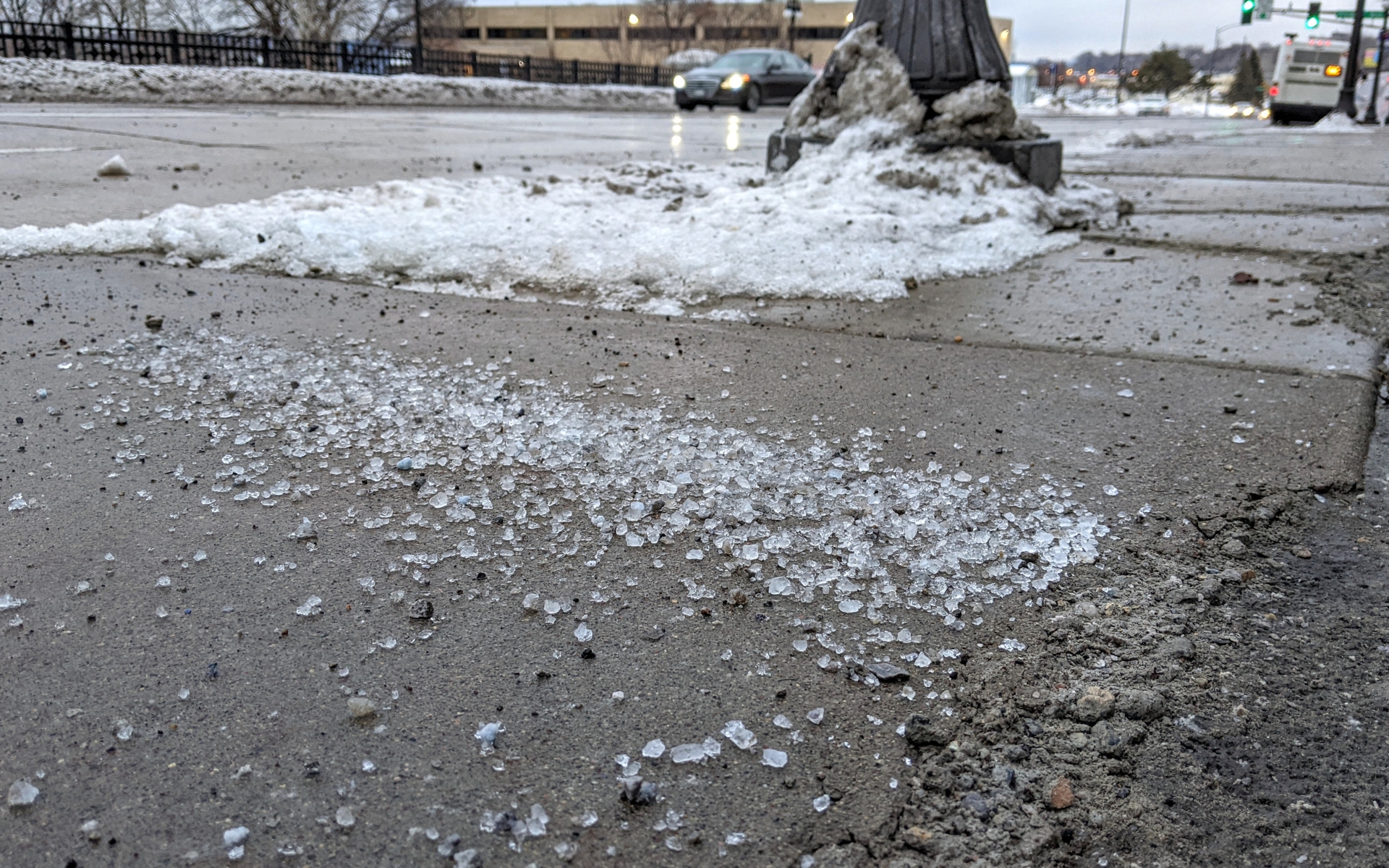
Chloride pollution caused by winter deicing salt can harm plants and wildlife. It also threatens drinking water. (Photo by FMR)
Road and sidewalk salt makes daily life easier during the winter, but the amount we use is causing problems for Minnesota’s rivers, lakes and streams.
Most of the deicing salt spread onto sidewalks, parking lots and highways eventually washes into our waters. There, the chloride (a mineral that occurs naturally in salt) builds to high levels — harming wildlife like fish and mussels, as well as plants and other river life. In rural and some suburban areas, chloride also contaminates wells that are used for drinking water.
"[Chloride pollution] has affected the diversity of plants and animals in our lakes, streams and rivers," says Andy Erickson, a scholar with the U of M’s Center for Transportation Studies. "Some local drinking water wells have begun to taste salty, forcing communities to dig deeper wells and our water utilities to increase treatment at a substantial cost."
If we want a healthy Mississippi River for all communities, we have to find ways to dramatically reduce the amount of deicing salt we use.
Unfortunately, things have been going in the opposite direction.
Winter Salt Awareness Week: Sign the petition, reduce salt at home or watch a webinar
How much road and sidewalk salt does Minnesota use?
First things first: 1 teaspoon of salt is enough to permanently pollute 5 gallons of water.
Now consider that every winter in Minnesota, we put down about 445,000 tons of salt on paved surfaces across the state, a pile comparable in size to U.S. Bank Stadium. (That is a lot of teaspoons.) The Twin Cities metro accounts for about 82% of that total.
Most of that salt is used for roads and highways, but deicers used at home or by commercial businesses make up a significant amount. (It’s difficult to pin down precisely. The MPCA says it could be anywhere from 5% to 45%.)
These numbers have been climbing. By some estimates, salt use by U.S. road maintenance departments has skyrocketed from 0.16 tons a year in 1940 to nearly 20 million tons per year today.
Minnesota is no exception, and our waters are now paying the price.
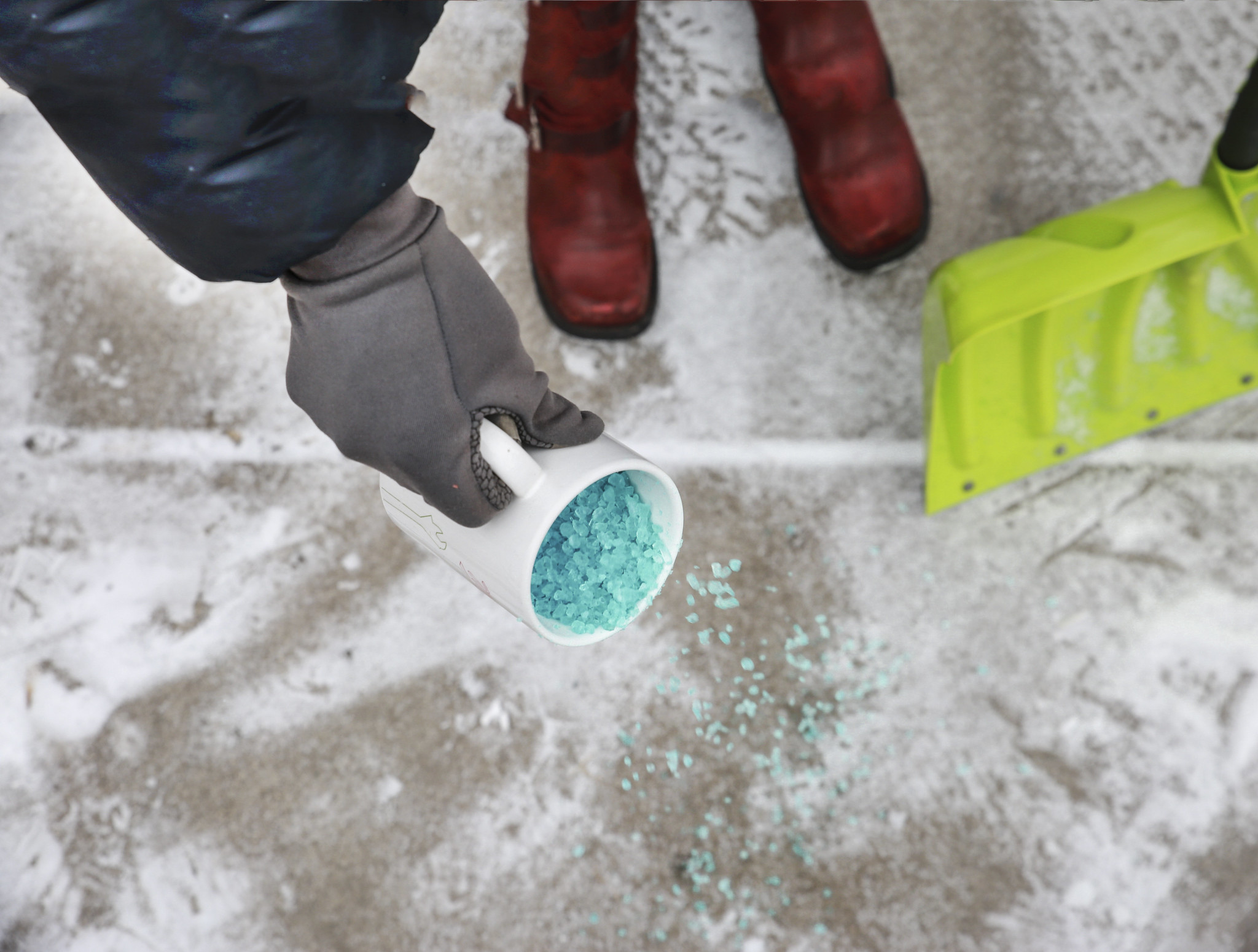
There are simple steps you can take at home to help reduce chloride pollution from deicing salt. (Photo by MPCA)
How road and sidewalk salt impacts water
Most of the salt we scatter about ends up in surface waters (rivers, lakes, streams) or groundwater systems, often via storm drains and runoff. Unsurprisingly, numerous reports (including our 2016 State of the River report) have found rapidly climbing chloride pollution levels. As of 2025, the MPCA says 65 water bodies in the state exceed the water quality standard for chloride. Many more are near that threshold and considered high risk.
The environmental consequences are pronounced, even if we don’t always see them. Certain fish species, as well as frogs and other amphibians, face lower survival rates and a higher risk of developmental issues. Dragonfly larva, mayflies and certain mussels are known to be sensitive to high chloride levels. Too much salt can kill plants, both underwater and along roadsides.
Communities that rely on groundwater for their drinking water are also at risk, as chloride levels in these important systems creep higher and higher.
There are other concerning impacts too: Pets and wildlife (such as birds) can be hurt by consuming excess salt. Plants near the road soak it up, soil health worsens, infrastructure gets corroded (Dakota County actually wraps some of hydrants in plastic because of road salt) and lake mixing patterns are disrupted, the MPCA says.
What you can do to help
Taking chloride out of water after the fact isn’t really feasible — it would be incredibly expensive to not just build out, but then maintain over the long term. The only realistic option is to keep salt from getting into our waters in the first place.
At home, you can help by:
- Shoveling early and often to keep ice from forming.
- Sweeping up excess salt and leftover salt after it has melted ice and before it enters a storm drain.
- Only applying salt when it's above 15 degrees. (Most salts stop working in the bitter cold.)
- Not over-applying: One coffee mug-full is enough for 10 sidewalk squares or a 20-foot driveway. One grain melts a 3-inch circle of ice.
- Considering alternatives, such as sand for traction.
- When driving, slowing down to protect public safety and make the most of salt on our roads.
- Take action: Add your name to our petition and sign up for advocacy alerts.
- Check out MWMO's winter maintenance video for more info and demonstrations
Addressing the larger challenge of road salt usage will require policy changes and more river-friendly practices. One significant win is expanded “smart salt” training, which is now available statewide in Minnesota. FMR supported the expansion of this voluntary “smart salt” training program, which can reduce salt application 30-70% — without compromising public safety.
We’ve also supported proposals such as liability protection for commercial applicators, allowing them to reduce the risk of “slip-and-fall” lawsuits. This has yet to be implemented in Minnesota. And we’ll continue to explore other avenues for addressing chloride pollution from winter road and sidewalk salt.
Sign the petition below to let policymakers, elected officials and community leaders know that you support measures that can reduce salt pollution, keeping our communities safe and our river healthy. We’ll also reach out when there are other opportunities to take action and move important policies forward.
Landscape for the river
Dig into more tips to help protect the river right from your own backyard.